

ACTIVITY 7.3: THE LEGACY OF SAIGU
ACTIVITY 7.3: THE LEGACY OF SAIGU
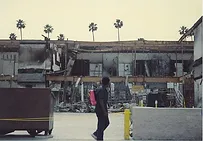
Students examine the legacy of Saigu for Korean Americans. They compare/contrast perspectives in two articles and consider the future for Korean Americans.
Activity Questions
- What is the Saigu legacy?
- In the South Central neighborhoods of Los Angeles, how have race relations changed since Saigu? How have they stayed the same?
- Being caught between two worlds, how do Korean Americans (immigrants) feel the pressures and the divide in the U.S. along racial lines, especially as they enter small businesses and urban communities?
- What racial inequalities and mistreatment of Korean Americans during the 1992 LA Civil Unrest persist today?
- How does your new understanding of Korean American experiences impact your understanding of Korean American identity?
Instructional Strategies
- Use the Lesson 7: Saigu: The 1992 LA Civil Unrest (Activity 7.3) presentation to support this lesson.
Quick-Write
- Provide students with the following prompt and allow them 5 minutes to quick- write their response. Call on student volunteers to share their reflections.
NOTE: Students will use their quick-write as their rough draft for the Summative Assessment.
- A legacy is something that is carried over from a previous generation and handed down to the next. It is believed that building a legacy helps establish stronger communities, but a legacy may also have negative implications.
- Write for 5 minutes about what you feel is the Saigu legacy. Use these questions to guide your response:
- What is a legacy?
- What is the Saigu legacy? How does it differ for different individuals or groups?
- Who are all the individuals and groups that contributed to handing down the Saigu legacy?
- Who are all the individuals and groups that were (and continue to be) impacted by the Saigu legacy?
- What could be done in the future to reshape the legacy of Saigu?
Paired Reading
- Have students access and read the two articles on Saigu’s legacy. (If necessary, distribute copies of the articles.)
- Pair students and allow them to determine who will read which article. Have them annotate their articles by highlighting examples of the legacy of Saigu.
- Have each student answer the question for their reading and be prepared to share with their partner:
- What might Edward Chang, Carole Park, and Korean American merchants feel is part of the Saigu legacy? Make a list of these elements and add this answer to your Quick-Write.
- What might Soon Yoon, Simon Choi, and the Korean American Federation feel is part of the Saigu legacy? Make a list of these elements and add this answer to your Quick-Write.
Return to Quick-Write
- After reading, have each pair of students join another pair (four students total) and share their Quick-Write.
- Have students return to their Quick-Write and add another paragraph that compares and contrasts ideas.
Closing Activity
- Hold class discussion on the Activity Questions, beginning with this one: In the South Central neighborhoods of Los Angeles, how have race relations changed since Saigu? How have they stayed the same?
Resources
- See also the Lesson 7 Teacher’s Guide and Lesson 7 Presentation.
- News Article: 25 Years After LA Riots, Koreatown Finds Strength in ‘Saigu’ Legacy (Web)
- News Article: 25 Years After LA Riots, Koreatown Finds Strength in ‘Saigu’ Legacy (PDF)
- News Article: Korean liquor store. Black neighborhood. A quarter-century after the riots, misgivings still run deep (Web)
- News Article: Korean liquor store. Black neighborhood. A quarter-century after the riots, misgivings still run deep (PDF)
25 years after LA_riots (PDF)
Korean_liquor_store_LA_Times (PDF)